Dubai
- Home
- Dubai
About Dubai
Off-Plan Properties in Dubai
Dubai doesn’t slow down. Every quarter, new towers break ground, new communities take shape, and new skylines are drawn from scratch. If you’re looking to buy property off-plan in Dubai, you’ve arrived at exactly the right moment. Off-plan properties in Dubai offer a rare combination: lower entry prices, flexible payment plans, and the chance to get ahead of a market that keeps outperforming expectations.
Whether you’re an overseas investor chasing capital growth, an expat ready to put down roots, or a family searching for a new apartment in Dubai to call home, this guide walks you through everything from unit types and pricing to the city’s best locations, top developers, and how payment plans actually work.
Price Guide and Unit Types
Off-plan apartments in Dubai span a wide spectrum, and so do the price points. Here’s a general breakdown of what you can expect across the current market:
| Unit Type | Starting Price (AED) | Typical Size |
| Studio | 450,000 | 350 to 500 sq ft |
| 1-Bedroom Apartment | 750,000 | 600 to 900 sq ft |
| 2-Bedroom Apartment | 1,200,000 | 1,000 to 1,400 sq ft |
| 3-Bedroom Apartment | 2,000,000 | 1,500 to 2,200 sq ft |
| Townhouse | 1,800,000 | 1,800 to 2,800 sq ft |
| Off Plan Villa for Sale in Dubai | 3,500,000+ | 3,000 to 6,000+ sq ft |
Prices shift quite a bit depending on the community, the developer, which floor you’re on, and the view you’re getting. Waterfront units and high-floor apartments in premium towers naturally sit at the top end. Studios in up-and-coming spots like Dubai South can come in well under AED 500,000, which keeps the door open for first-time buyers and investors who are working with a tighter budget.
Where to Buy Off-Plan Projects in Dubai
Dubai isn’t one market. It’s dozens of smaller markets stitched together, each with its own feel and its own investment story.
Downtown Dubai and Business Bay sit at the heart of the city’s commercial and cultural life. This corridor draws professionals and investors who want strong rental returns. Being steps from the Burj Khalifa, Dubai Mall, and the Canal means demand here rarely cools. New off-plan projects in Dubai within this stretch carry premium pricing, but the appreciation tends to match it.
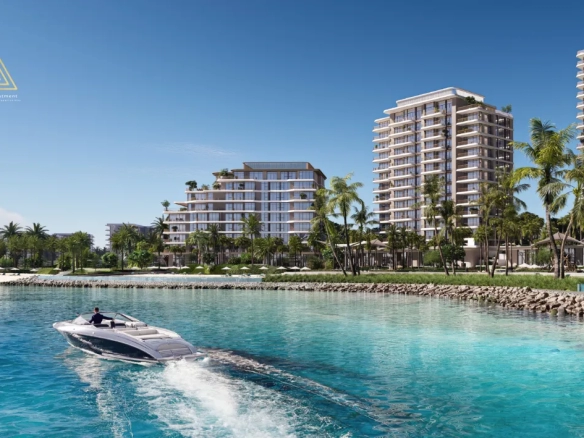
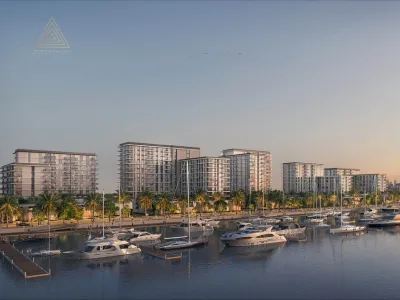
Dubai Creek Harbour is a waterfront masterplan anchored by Emaar, with the upcoming Dubai Creek Tower as its centrepiece. It brings together the feel of Marina-style living with views that stretch across the creek toward older parts of the city. Off-plan apartments for sale in Dubai in this area attract buyers who want the water on their doorstep and confidence in long-term growth.
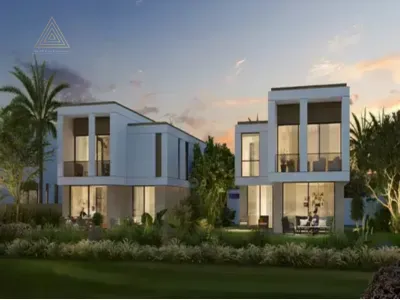
Dubai Hills Estate appeals to people who want greenery without giving up the city. A golf course, schools, a shopping mall, and wide streets lined with trees make this area a natural choice for families. When people search for an off-plan villa for sale in Dubai, this community comes up time and again.
Palm Jumeirah and Palm Jebel Ali are in a category of their own. Palm Jebel Ali, the newer and larger island, is currently seeing a fresh wave of launches, and prices there still represent something close to early-entry value given where the area is headed.
Dubai South sits adjacent to Al Maktoum International Airport and the Expo City precinct. Affordability is part of the pitch here, but so is the scale of infrastructure investment going into the surrounding area over the coming decade.
Jumeirah Village Circle has quietly become one of the most reliable areas for buy-to-let buyers. Rental demand is consistent, the community feel is real, and off-plan apartments in Dubai here come in at prices that make the numbers work without too much strain.
Meydan and Mohammed Bin Rashid City are where some of the more design-forward launches are happening right now. Lagoon communities, branded residences, and developers like Sobha and Ellington are active here, pushing the quality bar higher with each new project.
Featured Off-Plan Projects in Dubai
The market is active right now, with several launches drawing serious attention from buyers and investors alike.
Emaar, The Oasis is Emaar’s biggest villa and mansion community to date, built across 100 million square feet around a lagoon. It’s aimed squarely at families and buyers at the luxury end of the market.
Sobha Hartland 2 picks up where the original Sobha masterplan left off, with forest-themed residences sitting between Meydan Racecourse and the Ras Al Khor Wildlife Sanctuary. It’s an unusual combination that the market has responded to well.
Damac Lagoons leans into a Mediterranean theme, drawing visual inspiration from places like Marbella, Ibiza, and Santorini. It has consistently been one of the faster-selling off plan villa communities over recent years.
Ellington House IV in Dubai Hills is a boutique high-rise with design-led interiors and a limited unit count. Ellington has built a following among buyers who care about how a building looks and feels, not just where it sits.
Nakheel’s Palm Jebel Ali Villas are among the most talked-about launches Dubai has seen in years. Front villas on a brand-new Palm Island, with demand at launch that reflected just how much appetite there is for truly premium addresses.
The lineup changes regularly. Getting in touch with one of our advisors is the fastest way to see what’s available before it goes public.
Amenities Across Dubai Off-Plan Developments
New builds in Dubai are designed as full communities, not just places to sleep. What would have been considered a luxury extra a few years ago is now part of the base offering across most launches.
Buyers looking at off-plan apartments for sale in Dubai will generally find private pools and resort-style pool decks; well-equipped gyms and wellness facilities; children’s play areas and parks; smart home technology and concierge services; covered parking with EV charging; podium gardens; co-working spaces; pet-friendly zones in many communities; and ground-floor retail and food options built into the development from day one.
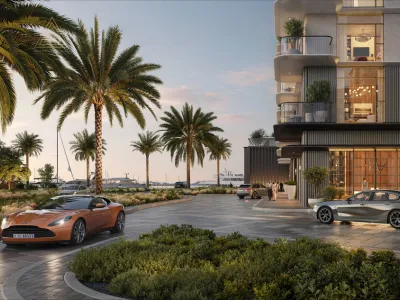
At the premium and ultra-luxury end, the list goes further. Private beach access, yacht berths, infinity pools with skyline views, cinema rooms, and interiors carrying names like Versace, Armani, Cavalli, or Bugatti have all appeared in recent launches across the city.
Top Developers with Active Projects in Dubai
The developer behind a project shapes everything from build quality to the likelihood of on-time delivery. Dubai’s regulatory setup requires developers to register projects and hold buyer funds in escrow, which gives the market a solid foundation. But a developer’s history still tells you a lot about what to expect.
Emaar Properties built Downtown Dubai and Dubai Hills Estate. They’re consistently recognised as one of the world’s leading developers, and their track record on delivery is what their reputation rests on.
Nakheel created the Palm Islands and carries the backing of the Dubai government. Their addresses are among the most sought-after in the city, and their presence on Palm Jebel Ali right now is significant.
Sobha Realty handles construction in-house, which shows up in their finish quality. Buyers who care about the details of what they’re getting tend to gravitate toward Sobha projects.
Damac Properties is one of the most consistently active developers in the market, with a wide range of off-plan apartments for sale in Dubai and villa communities at different price levels.
Aldar Properties came out of Abu Dhabi but is now active across Dubai with a strong reputation for thoughtful design and reliable delivery.
Binghatti Developers move fast. They’re known for visually distinctive buildings, competitive pricing in the mid-market, and delivery timelines that tend to come in ahead of the competition.
Ellington Properties works with smaller volumes and puts more attention into design. Their projects tend to sell out quickly and hold their value well in the resale market.
Payment Plans for Off-Plan Property in Dubai
Being able to buy property off-plan in Dubai without paying everything up front is one of the biggest advantages the market offers. Payments are spread out, often over several years, in ways that wouldn’t be possible with a completed property purchase.
Construction-linked plans tie payments to build progress. A typical structure might look like 10 to 20 per cent at booking, followed by instalments during construction totalling around 40 to 60 per cent, with the balance paid at handover. The exact breakdown varies by developer and project.
Post-handover plans have become a defining feature of the Dubai off-plan market and are a genuine draw for buyers. Under these arrangements, a portion of the price, often 30 to 50 per cent, is paid after you receive your keys, spread over anywhere from two to five years. You can be living in the apartment or collecting rent from a tenant while you’re still completing the purchase.
The 1 per cent per month structure has become a popular way for developers to present their plans. You pay one per cent of the purchase price each month, which keeps the monthly outgoing straightforward and predictable.
Crucially, most developers in Dubai do not charge interest on off-plan payment plans. For the construction period, that effectively means interest-free financing, which is something you’d struggle to find in most other property markets around the world.
What is an off-plan property in Dubai?
An off-plan property is one you purchase before the building is finished. In many cases, it hasn’t broken ground yet when you sign. You’re committing based on the developer’s plans, renders, and the terms laid out in the sales agreement, with payments structured to follow the build rather than front-load the cost.
In Dubai, every off-plan project must be registered with RERA before it can be sold. All buyer funds go into an escrow account supervised by the Dubai Land Department, and the developer can only access that money once construction milestones are independently verified. It’s a framework that protects buyers in ways most international off-plan markets don’t come close to matching.
When you buy a new apartment in Dubai off-plan, you’re reserving a specific unit, often with choices around floor level, view, and sometimes interior finishes, at today’s price. The building goes up around your investment, and by the time you collect the keys, the market has usually moved in your favour.
Why Buy Off-Plan Property in Dubai?
Off-plan remains the dominant way people buy property in Dubai, and there are real reasons why that keeps being the case.
Entry prices are lower. Developers price off-plan units below the equivalent completed property in the same area because they need sales to fund construction. That gap between off-plan pricing and completed values is where early buyers make their money.
Appreciation before handover is common in high-demand communities. Buyers who got into areas like Creek Harbour or Dubai Hills in the early phases saw values move well before they ever received their keys. In some projects, the gain between purchase and completion has been substantial.
Payment flexibility makes the numbers work for a wider range of buyers. You’re not raising a full purchase price upfront. You’re spreading it, and in post-handover plans, you continue to spread it after you’ve already received the property.
Everything is new. A new apartment in Dubai built today comes with current smart home systems, energy-efficient specs, and contemporary design choices. You’re not inheriting years of wear or an outdated layout.
Freehold ownership is available to foreigners in designated zones across the city. That ownership is registered with the Dubai Land Department, it’s clean, and it’s yours in the same way it would be for a UAE national.
The regulatory environment is mature. RERA oversight, escrow protection, and clearly defined legal rights for buyers mean the market functions with a level of transparency that investors coming from less regulated markets often find reassuring.
Primary vs Secondary Properties in Dubai
Knowing the difference helps you figure out which route actually fits what you’re trying to achieve.
Primary properties are off-plan units sold directly by developers. You’re getting the benefits covered throughout this guide: lower prices, staged payments, new-build specs, and the chance to benefit from appreciation during construction. The trade-off is time. Most projects take two to five years to complete, so this isn’t the route for someone who needs to move in next month.
Secondary properties are existing homes sold by their current owners. You can see them, inspect them, and in most cases move in fairly quickly. Financing through UAE mortgages is available. The downside is that prices sit higher than comparable off-plan units, and you’re typically paying a much larger portion upfront.
For investors with a medium-term horizon, off-plan properties in Dubai tend to come out ahead on both yield and capital growth. For buyers who need somewhere to live right now, the secondary market gets you there faster.
A lot of experienced buyers do both. They buy off-plan for the growth potential while renting or living in a secondary property in the meantime.
Frequently Asked Questions
Is it safe to buy off-plan property in Dubai?
Yes. RERA registration is mandatory for all off-plan projects, and buyer funds are held in escrow accounts overseen by the Dubai Land Department. Money is only released to the developer when construction milestones are independently confirmed. The protections in place are among the strongest of any off-plan property market in the world.
Can foreigners buy off-plan properties in Dubai?
Yes, non-UAE nationals can buy freehold property in designated zones. Most of the major communities, Downtown Dubai, Dubai Marina, Palm Jumeirah, Dubai Hills Estate, and many others, sit within freehold areas open to international buyers.
Do I need to pay everything up front?
No. Off-plan properties in Dubai are purchased on instalment plans tied to construction progress. Many projects also include post-handover payment options, so a portion of the price is paid after you’ve already received the keys.
What are the best areas for off-plan apartments in Dubai?
Dubai Creek Harbour, Business Bay, Dubai Hills Estate, Meydan, and JVC consistently come up as strong choices. Dubai South suits buyers focused on affordability and long-term airport-linked growth. Palm Jebel Ali is drawing strong interest from buyers at the premium end.
How long does an off-plan project take to complete?
Most projects hand over within two to five years of launch. Smaller boutique buildings can come in under two years. Large masterplan communities often phase delivery over a longer period.
What happens if a project is delayed?
Buyers have legal rights under RERA regulations. Depending on how significant the delay is and what the Sales and Purchase Agreement says, you may be entitled to compensation. In cases where a project is cancelled, a full refund from the escrow account is the buyer’s right.
What is the difference between off-plan apartments and off-plan villas in Dubai?
Off-plan apartments in Dubai are units within multi-storey residential buildings. An off-plan villa for sale in Dubai is a standalone or semi-detached home, usually within a gated community with a private garden. Both are widely available across the city’s major masterplan communities.
Can I resell my off-plan property before it’s completed?
Yes. Selling an off-plan unit before handover, known as an assignment, is legal in Dubai, subject to developer approval and the applicable transfer fees. It’s a common exit strategy for investors who want to realise a gain during construction rather than waiting for completion.
Ready to explore the latest off-plan properties in Dubai? Our team has direct access to new off-plan projects in Dubai before public launch. Get in touch to receive vetted listings, payment plan comparisons, and market insights from advisors who know every block of this city.
Available Projects
Take a look at the new off-plan developments in and around Dubai Take a look at some of the attractive investment offers.